The Frequent Traveler's Guide to Handling Disruptions Without Losing Money

The Frequent Traveler’s Guide to Handling Disruptions Without Losing Money — or Your Mind
Travel is usually exciting until your flight gets delayed, your connection disappears, the weather changes or your hotel suddenly becomes impossible to reach.
If you travel often, you probably already know this: something will eventually go wrong.
The trick isn’t to plan a trip where nothing goes wrong. That’s almost impossible. The better approach is to plan in a way that makes problems easier to handle.
A delayed flight doesn’t have to ruin your entire day. A missed connection doesn’t always mean losing a night’s hotel booking. And a sudden change in weather doesn’t mean sitting in your room wondering what to do next.
Here’s how frequent travelers handle disruptions without losing too much money — or their patience.
1. Don’t Build Your Trip Too Tightly
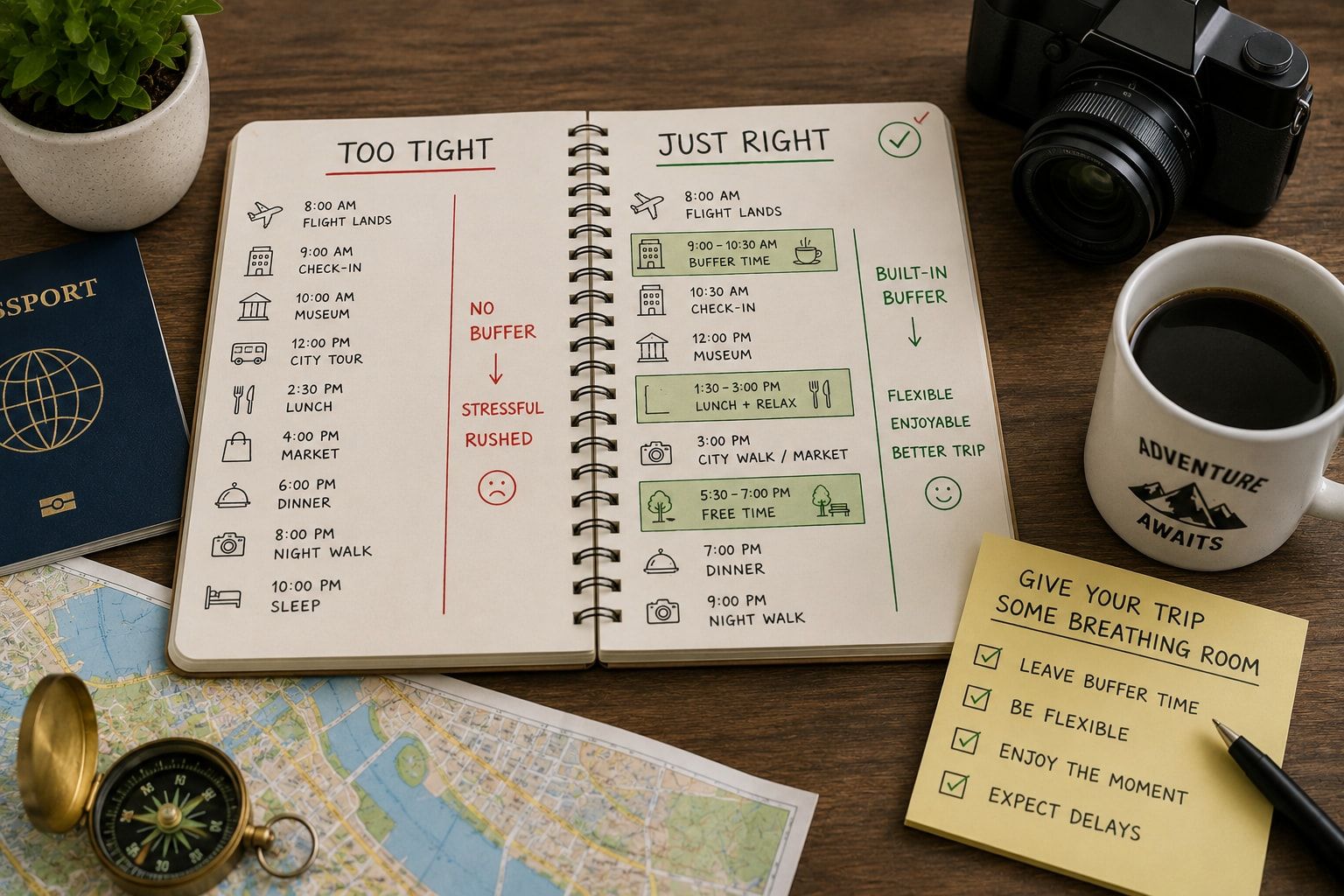
One of the easiest mistakes to make is filling every hour of a trip.
You land at 10 AM, check in at 12 PM, visit three attractions, have dinner at 8 PM and catch a train the next morning.
Looks efficient on paper.
In reality, one two-hour flight delay can destroy the whole plan.
Try leaving some breathing room between important parts of your trip. If you have an expensive tour booked in the afternoon, don’t schedule it immediately after landing.
A simple rule is:
The more important the booking, the more buffer you should give it.
For example, if missing a train means buying a new €150 ticket, arriving at the station 20 minutes early isn’t really enough.
2. Keep Your Important Bookings Together
When something goes wrong, you don’t want to search through 17 emails looking for your hotel confirmation.
Keep your:
- Flight details* Hotel bookings
- Train tickets* Tour reservations
- Rental car details* Travel insurance
- Passport information
in one easily accessible place.
Also save important confirmations offline. Airport Wi-Fi isn’t something you should depend on when you’re already stressed.
A screenshot of your booking confirmation can sometimes be more useful than an email you can’t open.
3. Know What You Can Actually Get Refunded
This is where travelers often lose money.
They assume a cancelled flight automatically means they’ll get every expense back. That’s not always how it works.
Your rights depend on the airline, route, country and reason for the disruption.
For example, in the United States, Department of Transportation rules provide for a refund when an airline cancels a flight or makes a significant change and the passenger chooses not to travel or accept the alternatives offered.
But your hotel, restaurant reservation or prepaid attraction may have completely different cancellation rules.
So before paying for something expensive, check:
What happens if I don’t show up because my flight is delayed?
That one question can save you a surprising amount of money.
4. Don’t Immediately Rebook Everything
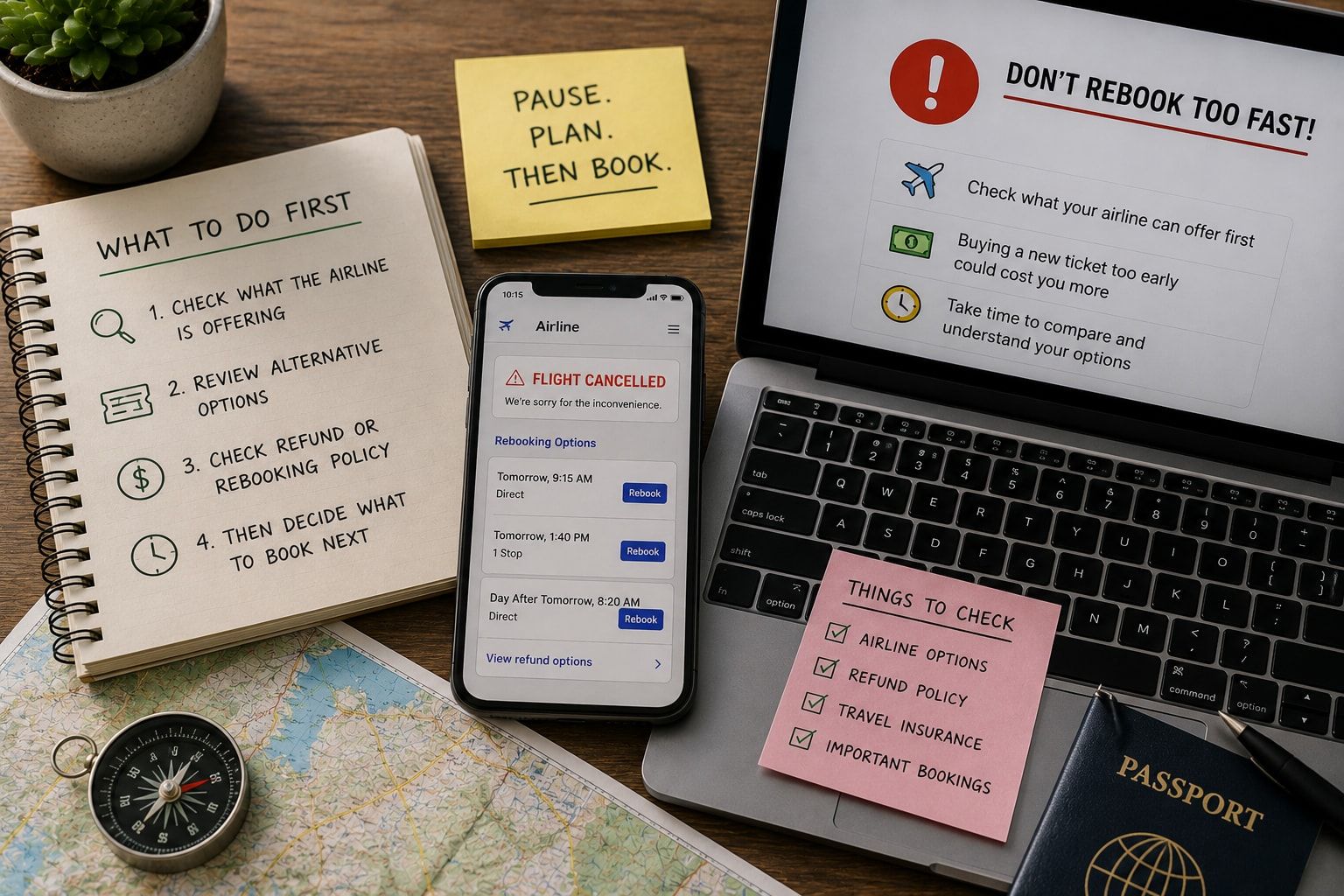
When your flight is cancelled, the natural reaction is panic.
You open another booking website and start looking for the fastest replacement.
Wait for a moment.
First check what the airline is offering.
Sometimes the airline can move you to another flight without you having to buy a completely new ticket. If you book a replacement yourself too quickly, you could end up paying twice.
Also check whether the original booking qualifies for a refund or alternative transportation before spending more money.
5. Separate “Urgent” From “Annoying”
Not every disruption needs an immediate solution.
A two-hour delay is annoying.
A missed international connection with no later flight is urgent.
Heavy rain that changes your sightseeing plans is inconvenient.
A cancelled hotel booking is a bigger problem.
When something changes, ask yourself:
What actually needs fixing right now?
This helps you avoid making expensive decisions simply because you’re stressed.
6. Have a Backup for the Expensive Parts
You don’t need a Plan B for everything.
But you should have one for the things that can seriously affect your trip.
For example:
Flight: Know the next available flights.** Accommodation:** Know at least one nearby hotel.** Transportation:** Know whether taxis, trains or buses are available.** Important attraction:** Know whether the ticket can be moved to another date.
This doesn’t mean booking everything twice.
It means knowing your options before you need them.
7. Don’t Assume Travel Insurance Covers Everything
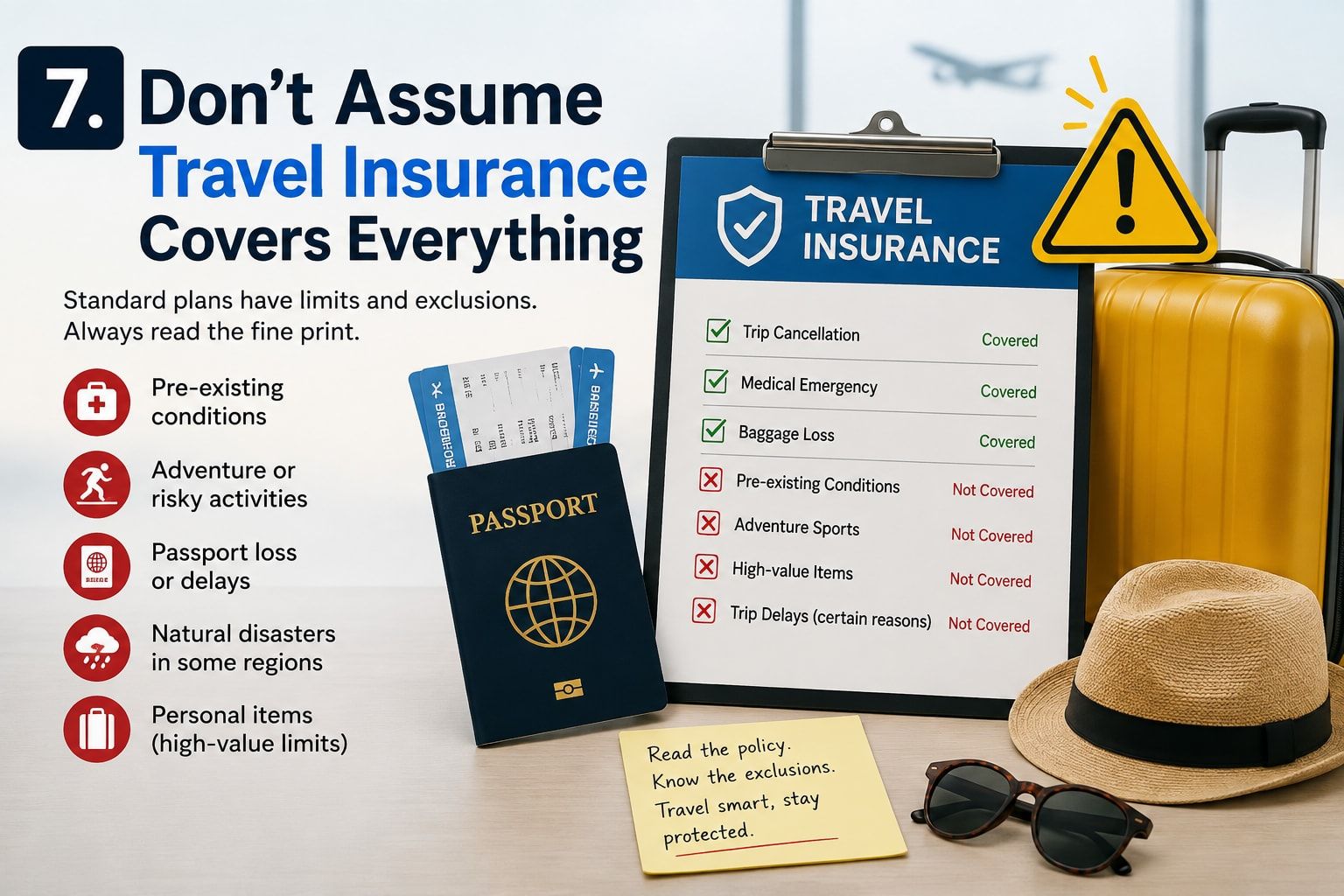
Travel insurance can be extremely useful, but don’t treat it like a magic refund button.
Different policies cover different situations.
Some may cover certain medical emergencies, trip cancellations or interruptions. Others may have strict conditions, exclusions or documentation requirements.
Before travelling, check:
- Cancellation coverage* Trip interruption coverage
- Medical coverage* Baggage coverage
- Delay coverage* Required documentation
- Exclusions
And keep receipts if something goes wrong.
If you later need to make a claim, “I think I spent around $400” isn’t nearly as useful as actual receipts.
8. Protect Your Non-Refundable Bookings
Frequent travelers learn to be careful with non-refundable bookings.
Sometimes the cheaper option isn’t actually cheaper.
Imagine two hotels:
Hotel A: $100, non-refundable** Hotel B:** $115, refundable until the day before
If your travel plans are uncertain, that extra $15 may be worth paying.
You are basically buying flexibility.
This doesn’t mean always choosing refundable options. Just think about how likely your plans are to change.
9. Use Technology to Watch the Trip, Not Just Plan It
Most travel planning tools are great before the trip.
But travel doesn’t stop changing once you arrive.
Your flight gets delayed. Rain starts earlier than expected. A restaurant cancels your reservation. You suddenly have three free hours.
This is where having a live itinerary becomes useful.
For example, Turom is built around keeping the trip updated while you’re actually travelling. Its On-Trip feature can monitor flight changes and help rebuild the day’s plan around delays, weather and other disruptions.
Instead of just telling you that your flight is delayed, the idea is to answer the more useful question:
“Okay, so what should I do now?”
That’s a much better travel problem to solve.
10. Don’t Try to Save Every Part of the Original Plan

This is probably the hardest lesson for frequent travelers.
Sometimes you have to let something go.
You planned six attractions.
The flight was delayed.
Now you can realistically visit four.
That’s okay.
Trying to squeeze all six into the remaining hours usually turns a disrupted trip into a miserable one.
Move the most important things.
Drop the least important ones.
Keep some free time.
The goal isn’t to complete a spreadsheet. You’re supposed to enjoy the trip.
11. Talk to the Right Person
When there is a disruption, don’t always stand in the longest airport queue.
Check the airline’s app first.
Look at the website.
Check your booking platform.
Sometimes you can change a booking yourself before reaching the counter.
If you do need help, be specific.
Instead of saying:
“My trip is ruined. What can you do?”
Try:
“My connecting flight was cancelled. What is the earliest alternative that gets me to my destination today?”
Clear questions usually get clearer answers.
12. Keep an Emergency Travel Budget
If you travel frequently, consider keeping a small emergency amount specifically for disruptions.
Not because you expect everything to go wrong.
Because sometimes paying $50 now can prevent a $500 problem later.
It could cover:
- An unexpected hotel night* Airport transportation
- Food during a long delay* A last-minute train
- A replacement booking
The important part is knowing how much you can comfortably spend without panicking.
13. Build Trips That Can Change

The best travel plans aren’t rigid.
They’re flexible.
Instead of planning:
Monday = Museum A → Restaurant B → Tour C → Bar D
Think:
Monday afternoon = museums + old town
Then decide which museum makes sense based on opening hours, weather and how you’re feeling.
You still have a plan.
But the plan isn’t controlling you.
That’s especially useful when travelling for several weeks or visiting destinations where weather and transportation can be unpredictable.
14. The Real Goal Is Not Avoiding Disruptions
You can’t control airline delays.
You can’t control storms.
You can’t control strikes, road closures or a hotel overbooking.
What you can control is how much damage those problems cause.
A good travel plan has:
- Some flexibility* Important bookings organized
- Cancellation rules understood* Backup options
- Emergency money* Travel insurance where appropriate
- A way to monitor changes* Enough breathing room
That combination can turn a stressful disruption into a small inconvenience.
And honestly, that’s probably the closest thing frequent travelers have to a superpower.
Plan Smarter With Turom
Travel planning shouldn’t stop when your flight takes off.
Turom is an AI travel planner designed to help you plan your trip and stay with you while you’re travelling. Its On-Trip experience can monitor changes such as flight disruptions and weather, then suggest a reorganized day around what has changed.
Instead of opening five different apps when your plans change, you can keep your itinerary, group and trip information together and adjust the day as things happen.
If you travel often, that’s the kind of help that can make a real difference.
Plan your next trip with Turom
Frequently Asked Questions
What should I do first when my flight is delayed?
First check the new flight status and your available alternatives. Then look at your connecting flights, hotel check-in time and any important bookings that could be affected.
Should I book a new flight immediately after a cancellation?
Not always. Check what the airline offers first, including rebooking and refund options. Buying another ticket immediately could mean paying for two flights.
How can I avoid losing money on hotel bookings?
Look carefully at cancellation deadlines before booking. If your plans may change, a slightly more expensive refundable room can sometimes be better value than a cheaper non-refundable one.
Is travel insurance worth it for frequent travelers?
It can be, especially for expensive or international trips, but it depends on your travel style and the policy. Always check exactly what is covered before buying.
How much buffer should I leave between a flight and another booking?
There isn’t one perfect number. For an important non-refundable booking, give yourself enough time to handle a realistic delay rather than planning around the best-case scenario.
Can an AI travel planner help when my flight is delayed?
Yes, some AI travel tools can help reorganize your itinerary around disruptions. Turom’s On-Trip feature is designed to watch for flight and weather changes and suggest adjustments to the day’s plan.
What is the biggest mistake frequent travelers make during disruptions?
Panic booking. When something goes wrong, people often start buying new flights, hotels or transport before checking their existing booking options. Take a few minutes, understand what changed and then decide what actually needs to be replaced.
Final Thought
Travel disruptions are going to happen.
The goal isn’t to become the person who somehow avoids every delay and cancellation. It’s to become the person who knows what to do when they happen.
Keep your important bookings organized. Leave some breathing room. Understand your cancellation rules. Have a backup plan for the expensive stuff.
And when the plan inevitably changes, don’t try to force the original itinerary back into place.
Just make a better plan for what happens next.