How to Plan a Group Trip Everyone Actually Agrees On

How to Plan a Group Trip Everyone Actually Agrees On
Planning a trip with a group sounds easy at first.
Everyone is excited about travelling together, trying new food, visiting new places and taking plenty of photos. Then the actual planning starts.
One person wants Dubai. Someone else wants Thailand. Another person says Bali would be better. Someone wants a luxury hotel, while another person is already checking budget stays. Then comes the question of flights, visas, food, shopping and activities.
This is where many group trips become difficult.
The good news is that you don’t need everyone to agree on every single thing. You just need to get the important decisions right before booking anything.
For Indian travellers planning a trip abroad, here is a simple way to do it.
Start With the Kind of Trip Everyone Wants
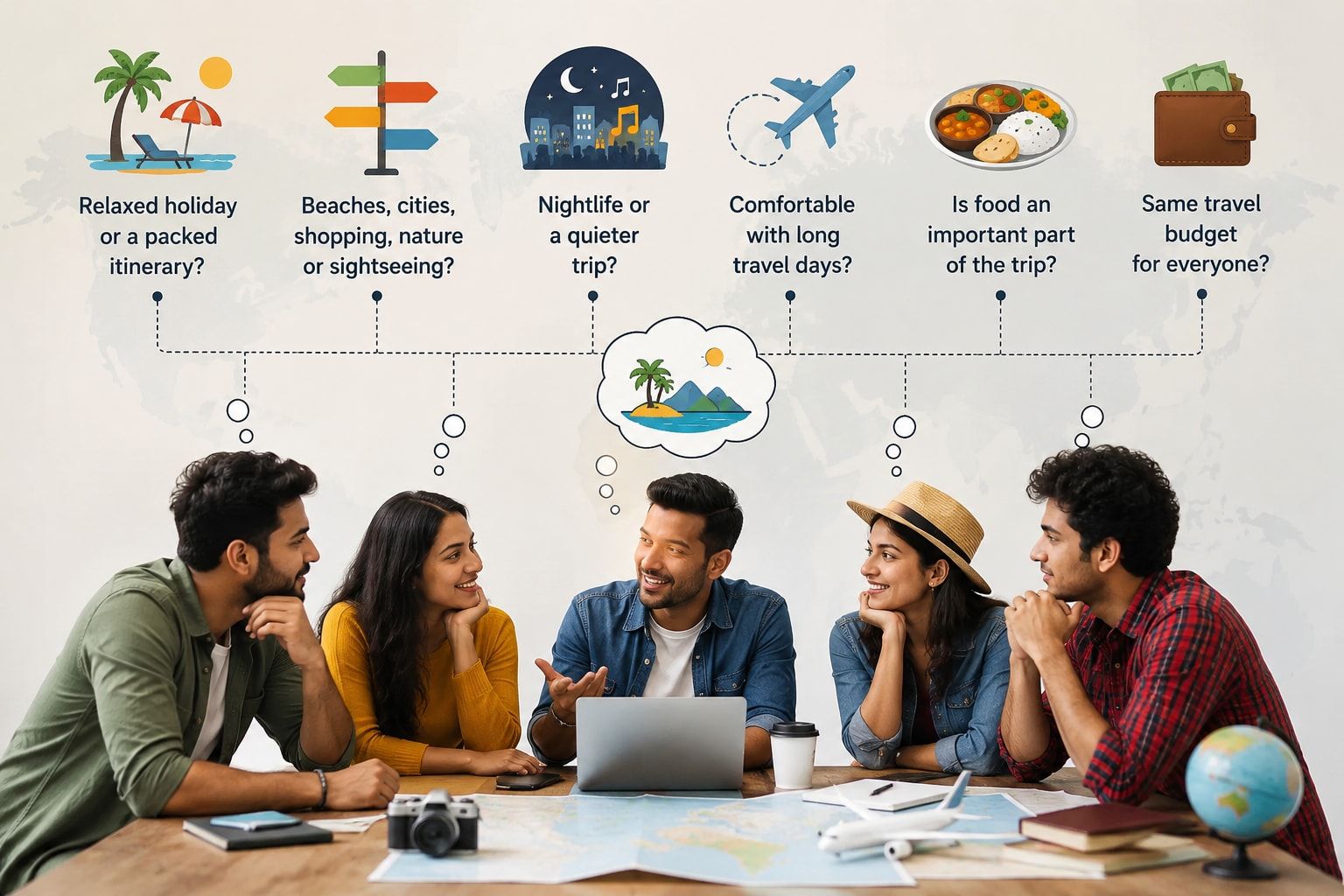
Before choosing a destination, talk about the type of holiday the group wants.
This sounds obvious, but it can save a lot of arguments later.
For example, one person may want a relaxing beach holiday, while another wants shopping, nightlife and sightseeing every day. If you don’t discuss this first, even a good destination can become a disappointing trip.
Try asking a few simple questions:
- Do we want a relaxed holiday or a packed itinerary?* Are we more interested in beaches, cities, shopping, nature or sightseeing?
- Do we want nightlife or a quieter trip?* Are we comfortable with long travel days?
- Is food an important part of the trip?* Does everyone have roughly the same travel budget?
Once you understand these preferences, choosing a destination becomes much easier.
Don’t Compare Ten Destinations at Once
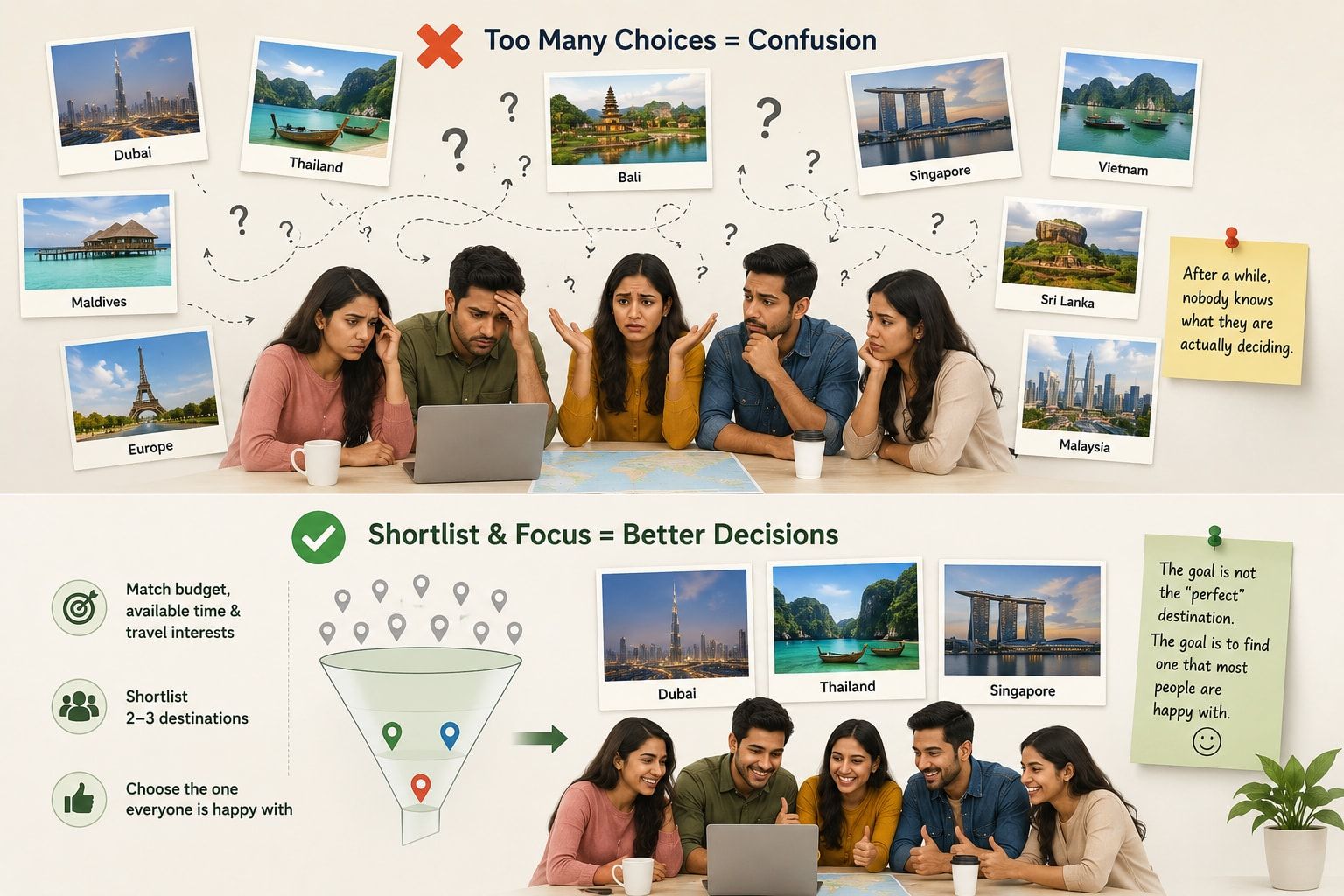
Group planning often goes wrong because there are too many choices.
Dubai sounds good.
Then someone suggests Thailand.
Then Bali comes up.
Then Singapore.
Then Vietnam.
Then someone sends a Europe package in the group chat.
After a while, nobody knows what they are actually deciding.
Instead of comparing ten destinations, shortlist two or three that match the group’s budget, available time and travel interests.
For example, if the group wants a mix of sightseeing, food, shopping and entertainment, destinations such as Dubai, Thailand, Singapore or Vietnam might be considered.
The goal isn’t to find the “perfect” destination.
The goal is to find a destination that most people are happy with.
Talk About Money Before Booking Anything

Money is probably one of the biggest reasons group travel plans change.
Someone may be comfortable spending more on hotels, while another person may have a strict budget.
This needs to be discussed before anyone books a flight.
Don’t just discuss the flight price. Think about the complete trip cost.
Your approximate budget should include:
- Flights* Hotel
- Visa fees, where applicable* Travel insurance
- Airport transfers* Local transportation
- Food* Sightseeing
- Activities* Shopping
- Emergency expenses
For example, a destination may have cheap flights but expensive hotels and activities. Another destination may have slightly higher airfare but lower daily expenses.
Looking only at the flight price can give you the wrong idea about the actual cost of the trip.
Decide How You’ll Split Expenses
This is another conversation that is better to have before the trip rather than during it.
Some expenses are naturally shared. Hotel rooms, airport transfers, taxis, rental cars and group meals may be shared between travellers.
But personal shopping, drinks, spa treatments or individual activities don’t necessarily need to be split among everyone.
A simple approach is to divide expenses into two groups:
Shared expenses
Hotel, common transportation, group meals, tours and other activities everyone agrees to.
Personal expenses
Shopping, personal meals, drinks, souvenirs and activities that only one or two people choose to do.
This makes things much easier when the trip starts.
Nobody wants to spend the last evening of a holiday calculating who owes whom money.
Check Visa Requirements Early
For Indian passport holders, visa requirements can be an important part of choosing a destination.
Don’t leave this until the last week.
Visa rules, documents, processing times and entry requirements can vary between countries and can change over time.
Before making non-refundable bookings, check the current requirements for every traveller.
This is especially important when a group includes people with different passports or different travel histories.
A destination that works for one person may not have exactly the same process for another.
Choose Flights That Work for the Group
The cheapest flight isn’t always the best flight for a group.
A flight that saves a little money but arrives very late at night may create extra problems with airport transfers and hotel check-in.
Similarly, a very early return flight can make the final day of the trip almost useless.
When comparing flights, look at:
- Departure and arrival times* Number of stops
- Baggage allowance* Airport location
- Total travel time* Connection time
- Cancellation or change conditions
For a group trip, convenience can sometimes be worth paying a little extra for.
Don’t Put Five Activities Into One Day
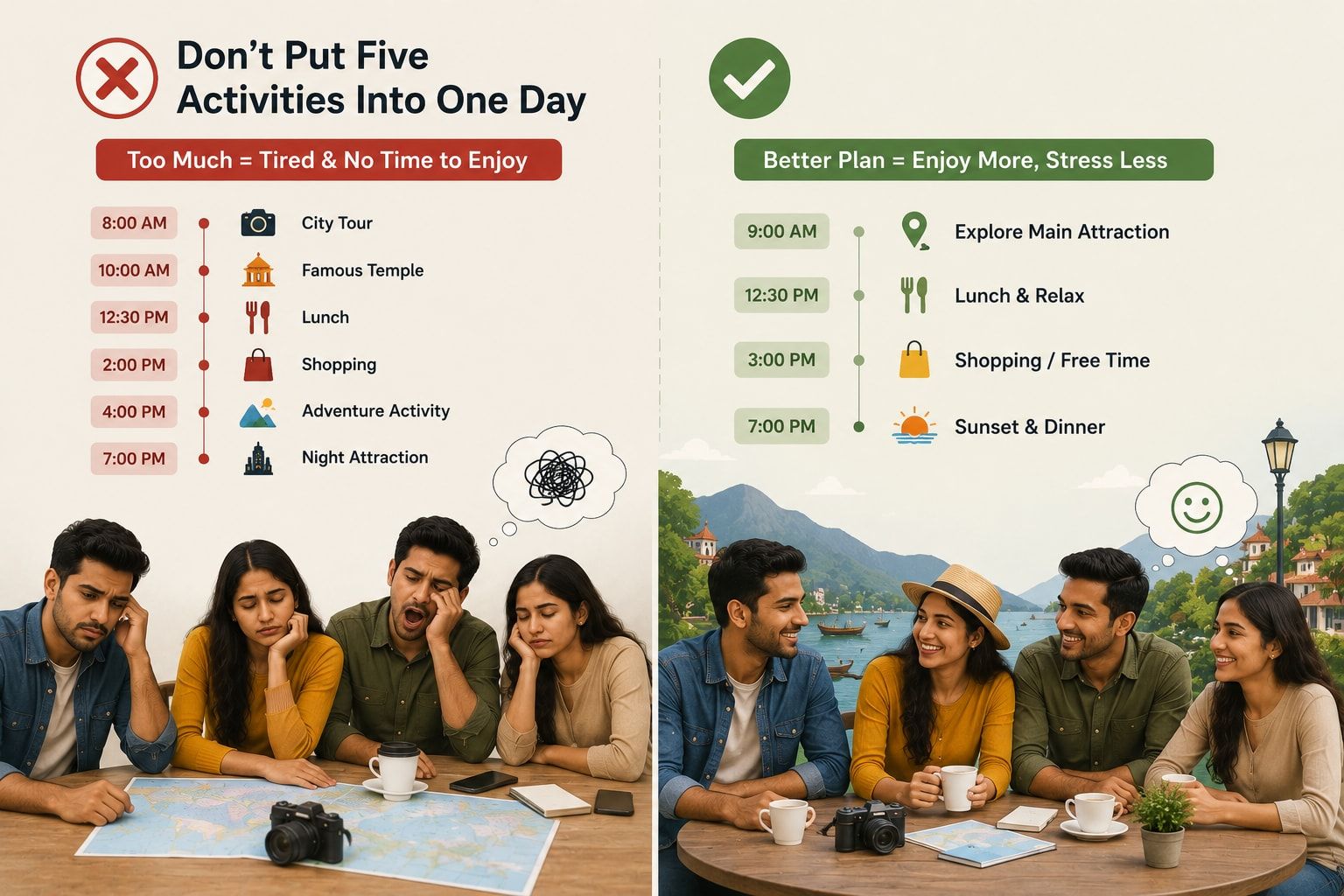
This is one of the easiest mistakes to make when planning a trip.
You find a list of “20 things to do” and try to fit everything into four days.
It looks great on paper.
In reality, everyone ends up tired.
A better itinerary usually has a few important activities each day, with enough space for lunch, travelling between places and simply enjoying the destination.
For example, if you’re visiting Dubai, you don’t necessarily need to visit multiple attractions across different parts of the city on the same day.
If you’re in Bali, leaving some free time can be just as valuable as booking another activity.
A holiday shouldn’t feel like a race against the clock.
Leave Some Free Time for the Group
Not everyone in a group wants to do the same thing all day.
One person may want to go shopping. Another may want to sit by the pool. Someone else may want to explore a local neighbourhood.
That’s completely normal.
Instead of forcing everyone to follow the same schedule from morning to night, keep some flexible periods in the itinerary.
You can have a few activities that everyone does together and leave other parts of the day open.
This gives people some freedom without breaking the group trip apart.
Consider Food Preferences Before Choosing Restaurants

Food can become a bigger issue than people expect when travelling abroad.
Some travellers are comfortable trying local food every day. Others may prefer Indian food, vegetarian options or familiar meals.
You don’t have to eat at Indian restaurants for the entire trip, but it is useful to know what the group is comfortable with.
Before booking a restaurant for a large group, check whether it has options that work for everyone.
This small step can prevent a lot of unnecessary discussion when everyone is already hungry.
Agree on the Hotel Standard
Hotels can create another common disagreement.
Someone may say, “Let’s book the cheapest option.”
Another person may want a four- or five-star hotel.
Instead of arguing about individual hotels, first agree on a basic standard.
For example:
- Maximum budget per night* Preferred location
- Number of people per room* Breakfast or no breakfast
- Minimum hotel rating* Distance from public transport or major attractions
Once these things are decided, hotel selection becomes much easier.
Make One Person Responsible for the Final Plan
Group decisions become difficult when five people are changing the same itinerary.
It is better to have one person maintain the final version of the plan after everyone has given their input.
This doesn’t mean one person makes all the decisions.
The group decides the important things together. One person simply keeps the final bookings, timings and itinerary organised.
It also prevents the classic situation where someone is looking at an old version of the itinerary while everyone else is following a new one.
Don’t Change Everything After Everyone Agrees
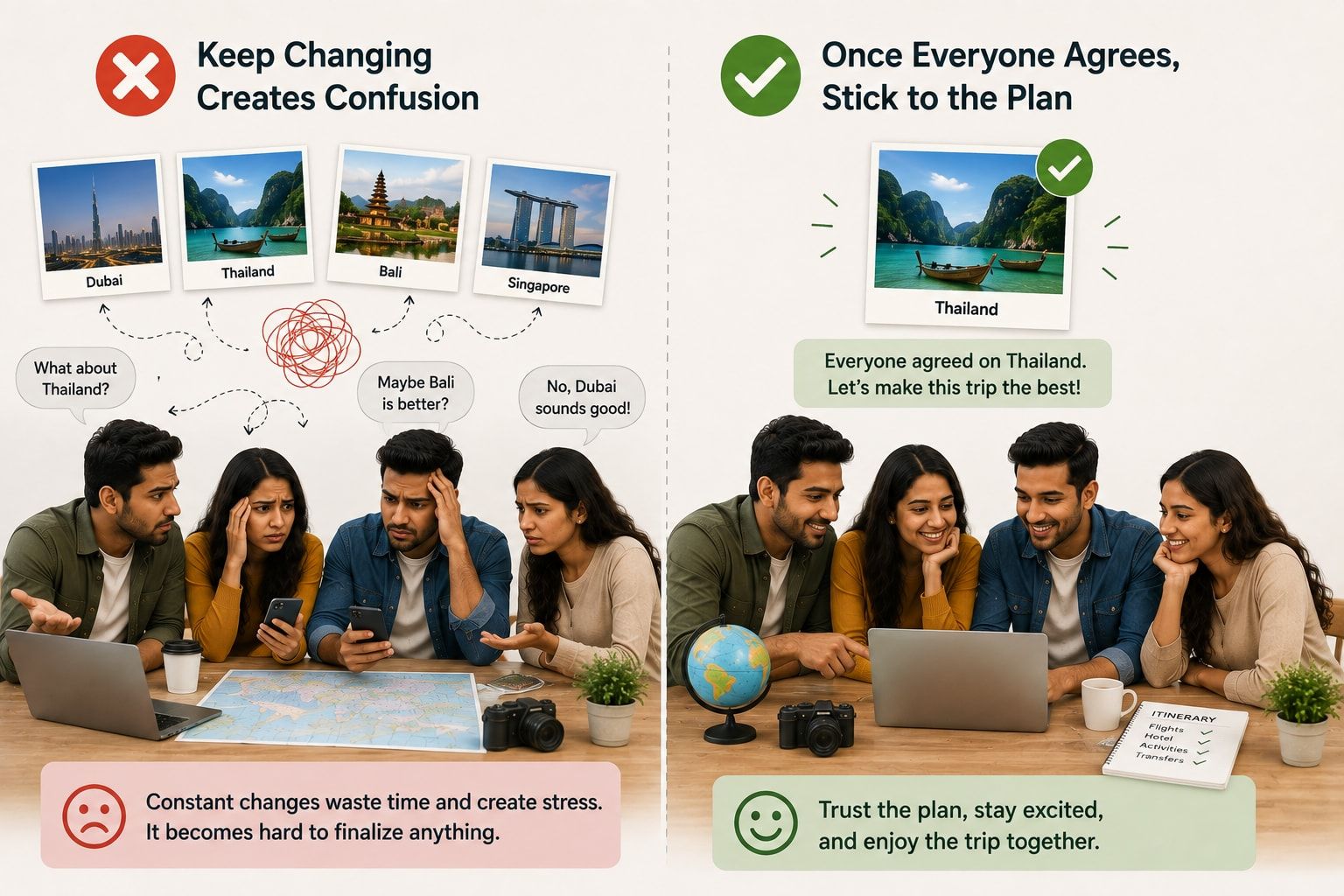
Once the group has agreed on the destination, flights, hotel and main itinerary, try not to keep reopening every decision.
Of course, changes are sometimes necessary.
But constantly asking, “Should we go somewhere else instead?” can make it almost impossible to finish the planning.
If everyone has agreed to Thailand, there is little value in sending a new Bali package every two days.
The same applies to hotels and activities.
Make the important decisions, check them properly and move forward.
A good group trip doesn’t require everyone to get their first choice every time.
It requires everyone to feel that their opinion was heard.
Keep the Main Itinerary Simple
You don’t need a 20-page travel document.
A simple itinerary can be enough.
For each day, keep track of:
Morning: Main activity** Afternoon:** Lunch + sightseeing or free time** Evening:** Group activity or dinner** Important information:** Booking times, addresses and transport details
You can keep more detailed information separately, such as flight confirmations, hotel bookings and visa documents.
The main itinerary should be something everyone can quickly understand while travelling.
Have a Backup Plan
Travel doesn’t always go according to schedule.
Flights can be delayed. Weather can change. Attractions can close. Someone may not feel well.
You don’t need a backup plan for every possible problem, but think about the important ones.
For example:
- What happens if the flight is delayed?* What if an outdoor activity is cancelled?
- What if someone loses their luggage?* What if one person doesn’t want to join an activity?
- What happens if the group gets separated?
Having a basic plan makes unexpected situations much less stressful.
Use Technology to Reduce the Planning Work
Planning a trip can involve a lot of research.
You may be comparing destinations, flights, hotels, attractions, travel times and budgets at the same time.
This is where travel planning tools can be useful.
Instead of opening dozens of tabs and manually putting everything together, an AI travel planner can help organise ideas around your destination, travel dates, interests and budget.
It can also make it easier to turn a rough idea into a practical itinerary that the group can discuss and adjust.
The Best Group Trip Is Not the Most Packed One
When people plan a holiday, there is often a temptation to make sure they “see everything.”
But travel isn’t only about ticking attractions off a list.
Sometimes the best memories come from a slow breakfast, an unexpected local restaurant, walking around a new neighbourhood or sitting together after a long day and talking about what happened.
Give the group enough time to actually enjoy the destination.
You don’t need to visit every attraction to have a great trip.
How Turom Can Help You Plan Your Trip

Planning a trip from India can involve a lot of moving parts, especially when different people have different budgets and interests.
Turom is an AI-powered travel planning platform that can help travellers organise their trips around their preferences, destinations and travel plans.
Instead of starting with a blank page, you can use AI to explore ideas, organise an itinerary and make the planning process easier.
For travellers planning their next holiday, Turom can help turn a collection of travel ideas into a more organised trip plan.
FAQs
What is the best way to plan a group trip?
Start by agreeing on the travel dates, approximate budget and type of holiday everyone wants. Then shortlist a few destinations and make the major bookings only after the group agrees.
How many people should be involved in planning?
Everyone should have a chance to share their preferences, but having one person manage the final itinerary can make the process much easier.
How should we divide expenses on a group trip?
Separate shared expenses such as hotels, common transport and group activities from personal expenses such as shopping and individual activities. Discuss the system before travelling.
Should everyone do the same activities?
Not necessarily. A few shared activities can keep the group together while free time allows people to explore their own interests.
How far in advance should I plan a trip abroad?
It depends on the destination, travel season, flights and visa requirements. Starting early generally gives the group more choices and enough time to deal with documentation.
Should we book the cheapest flights?
Not always. Look at the complete journey, including flight timings, baggage, stopovers, airport location and change or cancellation conditions.
How can we avoid arguments during a group trip?
Agree on the important things before leaving: budget, accommodation standard, main activities and expense sharing. Also accept that everyone doesn’t need to have the same preferences.
Can AI help with trip planning?
Yes. AI travel planners can help organise destination ideas, activities and itineraries based on preferences such as budget, trip duration and travel style. Travellers should still verify important details such as visa rules, flight conditions and booking policies before making reservations.
What makes a good group itinerary?
A good itinerary balances planned activities with free time. It should be realistic about travel time and give people enough flexibility to enjoy the destination rather than constantly rushing from one attraction to another.