Travel Insurance vs. Airline Compensation vs. Credit Card Cover: Who Pays When Things Go Wrong?
Travel Insurance vs. Airline Compensation vs. Credit-Card Cover: Who Actually Pays When Your Trip Breaks?
A cancelled flight.
A missed connection.
A suitcase that doesn’t show up.
A hotel booking you can’t use because your flight was cancelled.
When something goes wrong during a trip, the first question is usually pretty simple:
“Who is going to pay for this?”
The confusing part is that there can be several possible answers.
It could be the airline. It could be your travel insurance company. Your credit card might also provide some form of protection.
Sometimes you may even have more than one option.
But these three types of cover are not the same thing. They work for different situations, have different conditions and may cover completely different costs.
Understanding the difference before your trip can save you a lot of stress when something actually goes wrong.
The Three Possible Payers
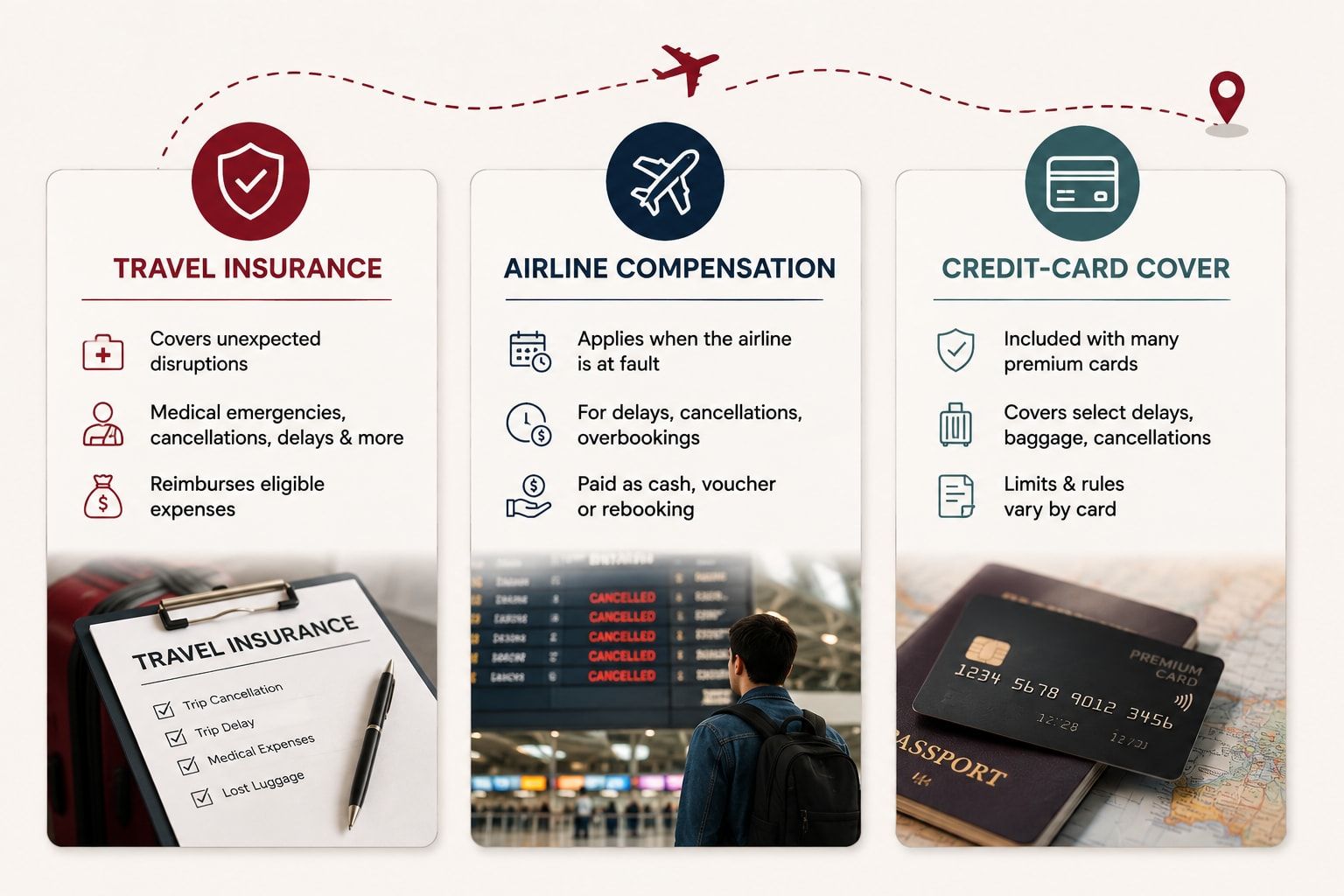
Before getting into individual situations, it helps to understand the basic difference.
The Airline
The airline may be responsible when the problem comes from the airline’s side, depending on the circumstances and the rules that apply to your journey.
This could involve things such as:
- Flight cancellation* Significant delays
- Denied boarding* Baggage problems
- Certain missed connections* Other disruptions covered by applicable passenger-rights rules
But airline compensation is not automatically available every time a flight is delayed or cancelled.
The reason for the disruption matters.
Travel Insurance
Travel insurance is designed to protect you against certain unexpected events covered by your policy.
Depending on the policy, this may include:
- Medical emergencies* Trip cancellation
- Trip interruption* Travel delays
- Baggage loss or delay* Missed connections
- Emergency assistance
The important word here is covered.
Buying travel insurance doesn’t mean every travel problem becomes an insurance claim.
The policy wording decides what is actually covered.
Credit-Card Cover
Some credit cards come with travel-related benefits.
Depending on the card and country, these could include things like:
- Trip cancellation cover* Trip interruption
- Baggage protection* Travel accident cover
- Flight delay benefits* Rental car protection
- Emergency assistance
But there is usually a catch.
You may need to have paid for the trip, or a certain part of it, using that particular card.
The exact rules can be very different from one card to another.
So don’t assume that simply owning a travel credit card means your entire holiday is insured.
So, Who Pays When Your Flight Is Cancelled?
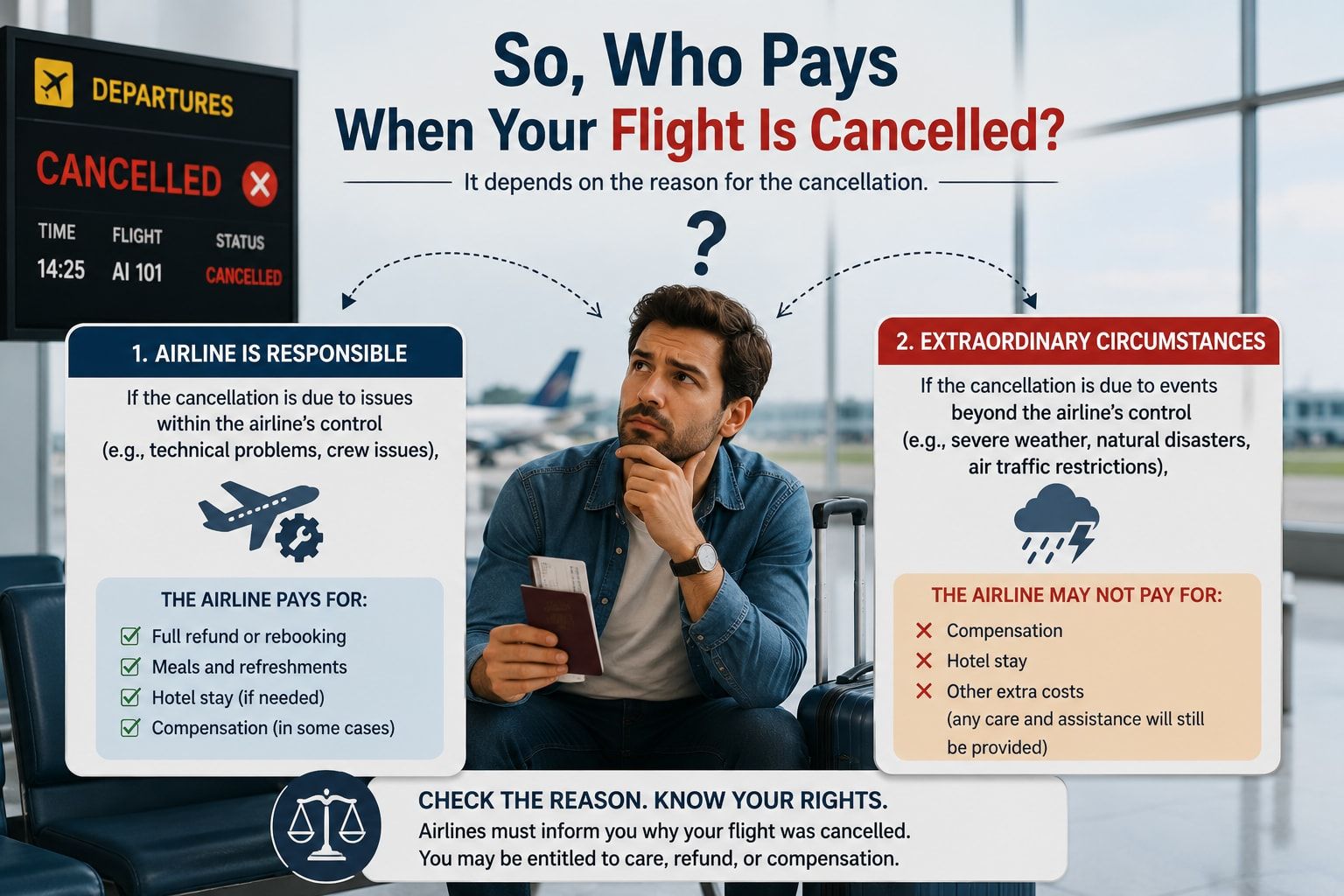
Let’s take a common example.
You arrive at the airport and find out that your flight has been cancelled.
Your first instinct might be to contact your travel insurance company.
But that may not be your first step.
Start with the airline.
Ask what options are available under the airline’s applicable rules and the terms of your ticket.
Depending on the situation, the airline may offer a refund, rebooking or other assistance.
Whether you are entitled to additional compensation depends on the circumstances, the route and the passenger-protection rules that apply.
Your travel insurance may become relevant if you have additional losses that fall within your policy.
For example, perhaps you have a covered delay and need to pay for meals or accommodation.
But again, don’t assume insurance will automatically reimburse everything.
What If the Airline Says the Cancellation Was Because of Weather?
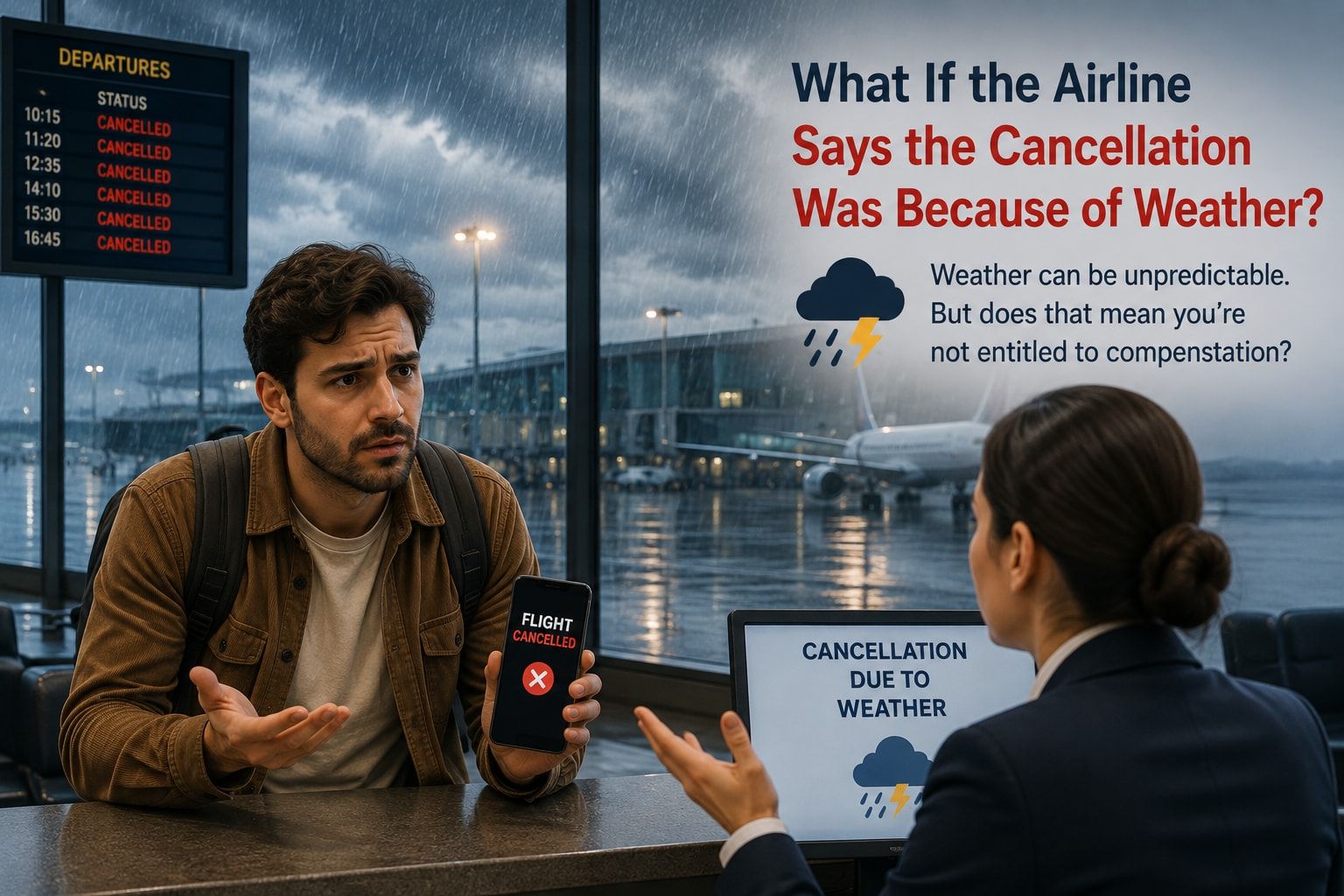
This is where things can become confusing.
Bad weather can affect flights even when the airline has done everything reasonably possible to operate the flight.
In some legal systems, certain events outside an airline’s control can affect whether compensation is payable.
That doesn’t necessarily mean you’re left with nothing.
The airline may still have obligations depending on the applicable passenger-rights rules and circumstances.
Travel insurance may also provide benefits for covered delays or cancellations.
This is why the reason for the disruption is often just as important as the fact that your flight was cancelled.
What If the Airline Cancels the Flight and You Lose Your Hotel Booking?
This is a slightly different problem.
Let’s say you booked a non-refundable hotel for ₹20,000.
Your airline cancels your flight, and by the time you arrive, you’ve already lost the first night’s booking.
Can the airline pay for your hotel loss?
Maybe, depending on the circumstances and applicable rules.
Can your travel insurance pay?
Possibly, if your policy covers the specific situation.
Can your credit card pay?
Possibly, if the purchase and circumstances meet the card’s benefit requirements.
There isn’t one universal answer.
This is why keeping your booking confirmations and cancellation information is important.
What If Your Baggage Doesn’t Arrive?
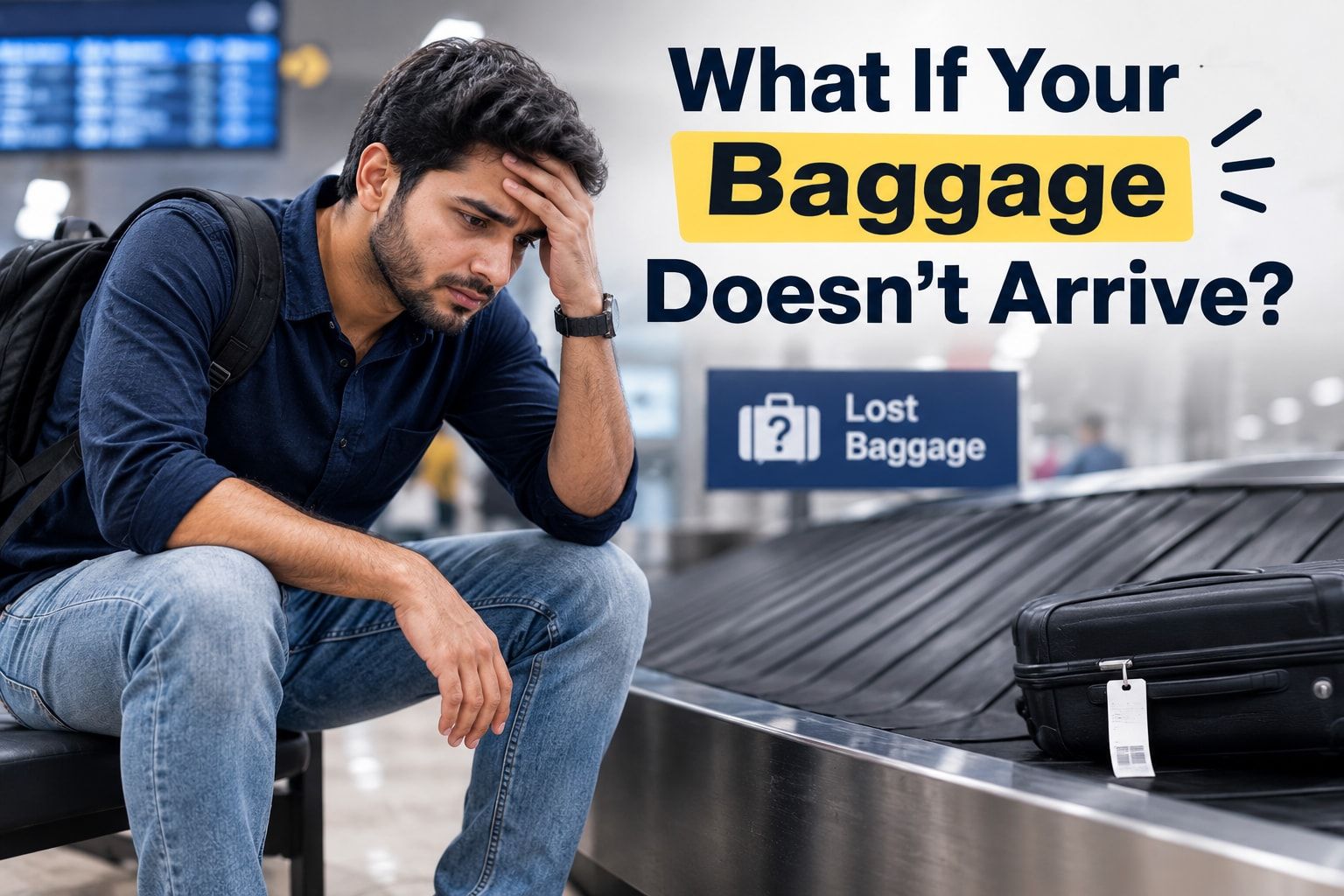
This is another situation where several types of protection can overlap.
Your airline or baggage carrier may have responsibilities for delayed, lost or damaged baggage under the rules that apply to your journey.
Your travel insurance may also have baggage-related benefits.
And some credit cards may provide baggage protection.
But don’t assume you can simply collect the full amount from all three.
Insurance and card benefits can have conditions around other compensation you’ve already received.
You may also need to provide evidence of the loss.
So if your suitcase disappears, report it to the airline before leaving the airport if possible and keep the baggage report or reference number.
That piece of paperwork can become very important later.
What If Your Trip Is Cancelled Before You Leave?
Imagine you have booked flights, hotels and activities.
Two days before the trip, something unexpected happens and you can’t travel.
Now the airline, travel insurance and credit card may all come into the conversation.
But they don’t necessarily cover the same thing.
If your airline ticket is refundable or the airline has cancelled the flight, the airline may be responsible for the applicable refund or rebooking.
If you need to cancel because of a covered reason, travel insurance may help with eligible prepaid expenses.
A credit card may also have trip cancellation protection, but only if its terms are satisfied.
The key question isn’t:
“Do I have travel insurance?”
It is:
“What exactly caused me to cancel, and does my cover include that reason?”
What If You Get Sick During the Trip?
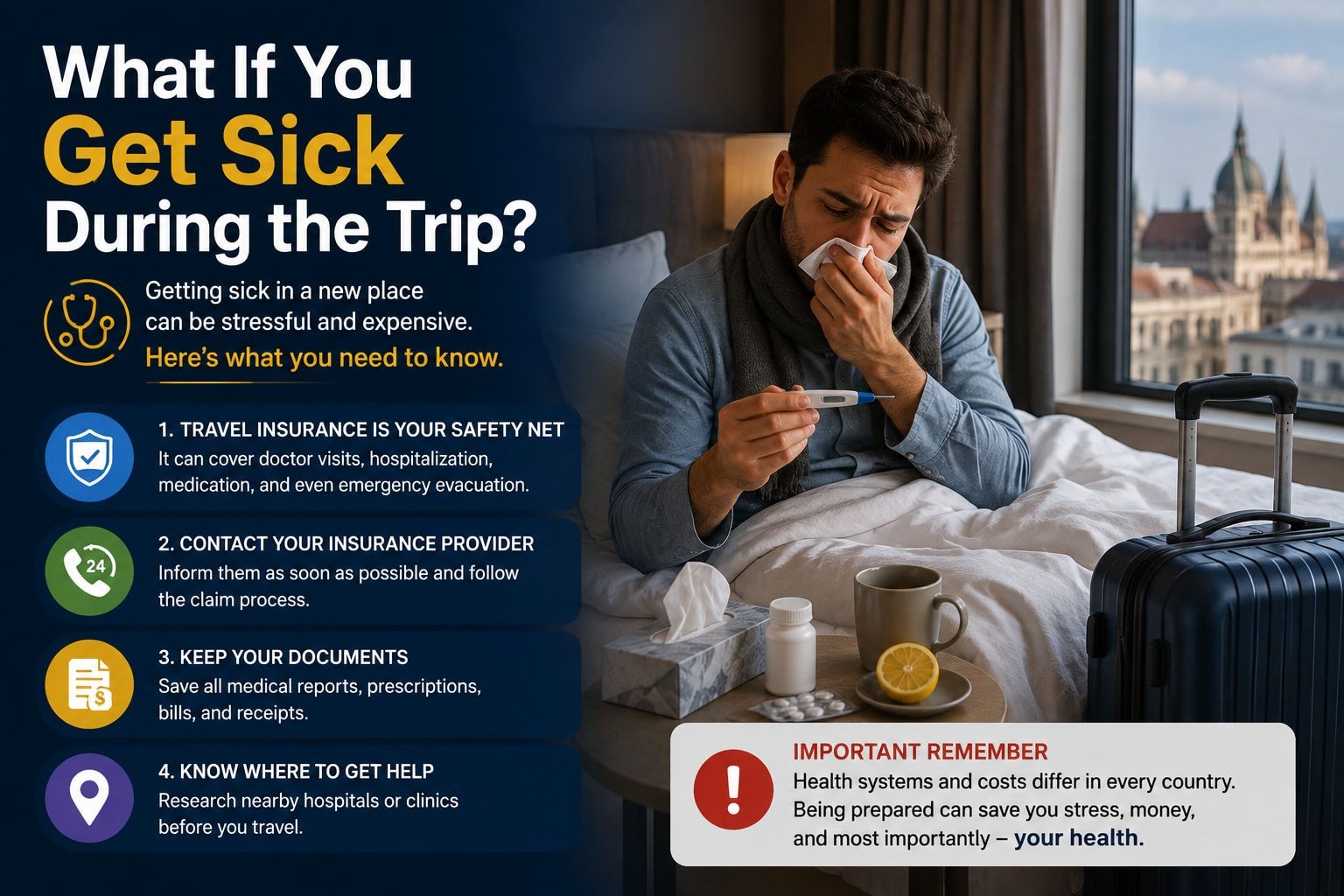
This is one area where travel insurance can be particularly important.
Airline compensation generally isn’t designed to pay your overseas medical bills simply because you became sick.
A credit card may provide certain travel-related benefits, but the exact coverage varies significantly.
Travel insurance can potentially cover eligible medical expenses, emergency treatment and assistance depending on the policy.
This is why travellers shouldn’t look at travel insurance only as protection against cancelled flights.
Medical cover can be one of the most important parts of the policy.
What If You Miss Your Connection?
Imagine your first flight is delayed and you miss your connecting flight.
Who pays?
Again, it depends.
If the flights are on the same booking, the airline may have responsibilities under its conditions of carriage and applicable passenger-rights rules.
If you booked two completely separate tickets, the situation can be very different.
Travel insurance may cover certain missed-connection situations.
Some credit cards also offer trip-delay or missed-connection benefits.
This is a good example of why the way you book your journey matters.
Two flights that look like the same journey on your phone can have very different protection depending on whether they are on one booking or separate bookings.
What Does “Primary” and “Secondary” Coverage Mean?
You may see these terms when reading insurance or credit-card benefits.
Primary coverage generally means that the benefit can respond without requiring you to first make a claim through another source, subject to the policy terms.** Secondary coverage** generally means another source may need to be used first.
The exact meaning and claims process can vary by provider.
This matters because you might have credit-card baggage protection and travel insurance at the same time.
You shouldn’t automatically assume you can choose whichever one pays the most.
The terms may determine which coverage responds first.
Can You Claim From the Airline and Travel Insurance?
Sometimes, yes.
But this doesn’t mean you can get paid twice for the same loss.
For example, suppose an airline refunds ₹10,000 for a cancelled ticket.
If you then make an insurance claim for the same ₹10,000, the insurer may take that refund into account.
Insurance is generally designed to cover eligible losses, not create a profit from the same event.
That’s why you should tell your insurer about refunds or compensation you’ve already received.
Being transparent can also make the claim process much easier.
What About Credit-Card Cover?
Credit-card travel protection is often overlooked because people don’t think of their credit card as insurance.
But some cards include useful travel benefits.
The problem is that the requirements can be very specific.
For example, a benefit might require:
- The flight or hotel to have been paid for using the eligible card* A minimum percentage of the booking to be paid with the card
- The trip to meet a specific definition* A covered reason for cancellation
- Documents proving the loss* A claim to be submitted within a particular period
So before relying on your card, check the actual benefit guide for your specific card.
Don’t rely only on what the bank’s advertisement says.
The Most Important Thing: Check What Caused the Problem
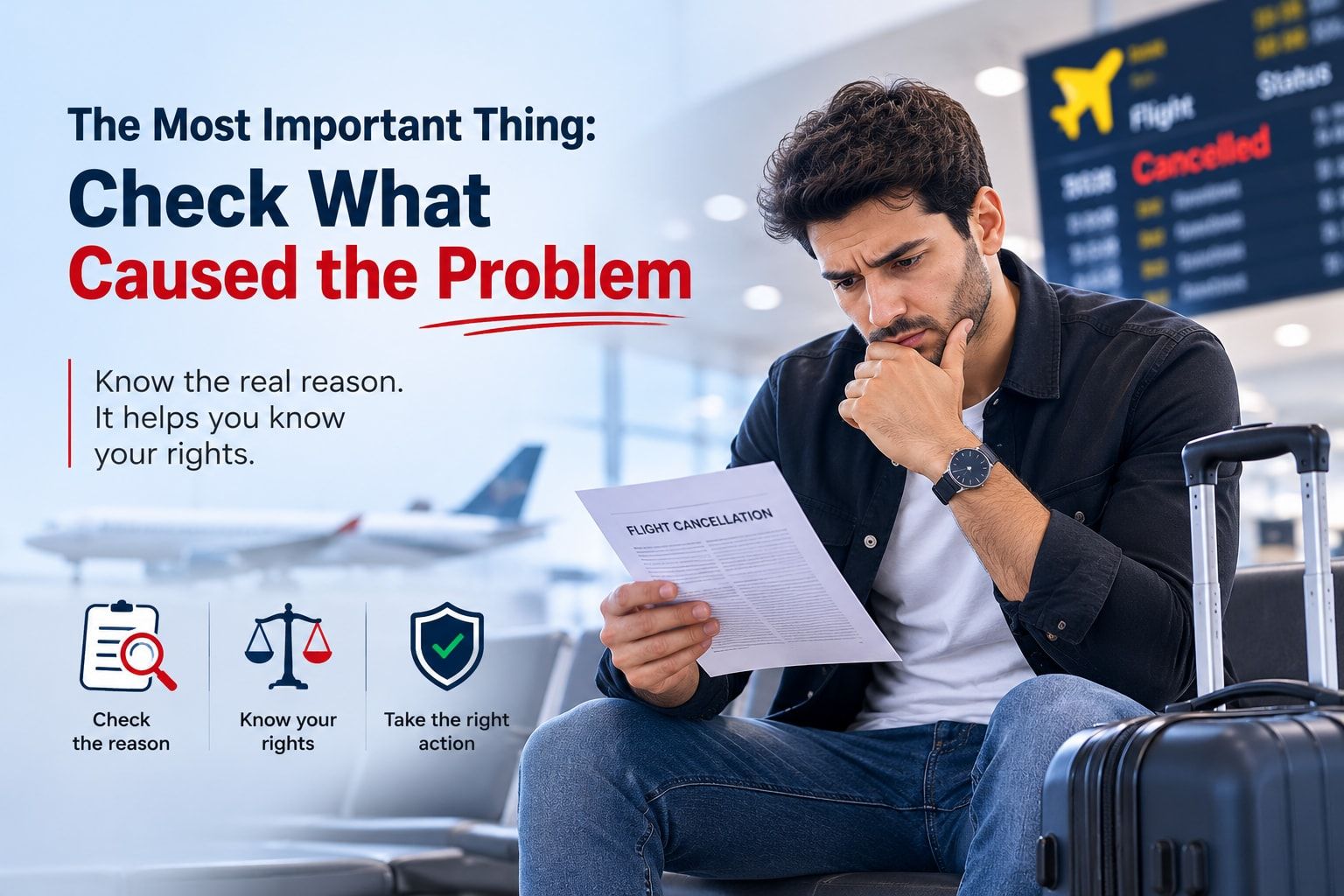
When a trip goes wrong, don’t immediately ask:
“Which company should I claim from?”
Ask these questions first:
What happened?
Who caused it?
What did I lose?
What protection did I buy?
What rules apply to this journey?
This usually makes the answer much clearer.
For example:
| Problem | First place to check | Other possible cover |
|---|---|---|
| Airline cancels flight | Airline | Travel insurance / card cover |
| Flight delay | Airline rules | Insurance / card benefits |
| Lost baggage | Airline | Insurance / card cover |
| Medical emergency | Travel insurance | Card benefits, if applicable |
| You cancel a trip | Ticket terms | Insurance / card cover |
| Missed connection | Airline, especially if one booking | Insurance / card benefits |
| Hotel lost due to covered disruption | Booking provider / airline where applicable | Insurance / card cover |
| Travel interruption | Airline or relevant provider | Insurance / card cover |
This is only a starting point. The actual answer depends on your booking, policy and applicable rules.
Don’t Wait Until Something Goes Wrong to Read the Policy
This sounds obvious, but most people don’t do it.
They buy travel insurance, receive a long PDF and never open it.
Then something happens and they start searching for the policy document while sitting at an airport.
Instead, before travelling, find these sections:
- Medical cover* Trip cancellation
- Trip interruption* Travel delay
- Baggage* Missed connection
- Exclusions* Claim procedure
- Emergency contact information
You don’t need to memorise the whole policy.
Just know where the important information is.
Keep Your Documents in One Place

When a claim happens, documentation can matter almost as much as the event itself.
Keep copies of:
- Flight tickets* Boarding passes
- Hotel bookings* Activity bookings
- Receipts* Travel insurance policy
- Credit-card benefit guide* Airline emails
- Cancellation notices* Baggage reports
- Medical documents, if relevant
A simple folder on your phone can save you a lot of trouble.
If possible, keep important documents accessible offline too.
Airport Wi-Fi isn’t always reliable when you need something quickly.
Take Screenshots When Something Changes
Suppose the airline app says your flight has been cancelled.
Take a screenshot.
If the airline sends an email, keep it.
If a hotel confirms that your booking can’t be refunded, save that message.
If you buy something because of a covered delay, keep the receipt.
You don’t need to photograph every little thing during a holiday.
But when something goes wrong, start keeping a clear record from that point onward.
Don’t Buy Extra Things Just Because You Expect Insurance to Reimburse Them
This is another common mistake.
A flight gets delayed and someone immediately books an expensive hotel, premium meal and taxi assuming insurance will cover everything.
That’s risky.
Some policies have reasonable limits or require expenses to be necessary and reasonable.
Some may require prior approval for certain expenses.
Before spending a large amount because of a travel disruption, check the policy or contact the insurer when possible.
The same applies to credit-card benefits.
A Simple Example
Let’s say you are travelling abroad.
Your flight is cancelled because of a disruption.
You have:
- A refundable airline ticket* Travel insurance
- A credit card with travel benefits
Your best approach isn’t to send three claims immediately.
Instead:
Step 1: Contact the airline
Find out whether you can be rebooked or refunded and what assistance is available.
Step 2: Calculate your actual loss
Maybe you lost a hotel night, prepaid activity or had additional reasonable expenses.
Step 3: Check your travel insurance
Look for cancellation, delay or interruption benefits that match what happened.
Step 4: Check your credit-card benefits
See whether your booking and situation qualify.
Step 5: Keep records
Save every relevant email, receipt and confirmation.
Step 6: Avoid duplicate claims
If one provider reimburses a particular loss, tell the other provider when required.
It sounds like extra work, but it is much easier than trying to untangle everything weeks later.
The Biggest Mistake Is Assuming One Cover Does Everything
Airline protection, travel insurance and credit-card benefits are three different layers.
Think of them like this:
Airline:
“What does the airline owe me or offer me because of what happened to my flight?”
Travel insurance:
“What losses are covered under the policy I purchased?”
Credit card:
“What travel benefits come with my card, and do I meet their conditions?”
Once you separate these questions, travel disruptions become much easier to understand.
Before Your Next Trip, Do This 10-Minute Check
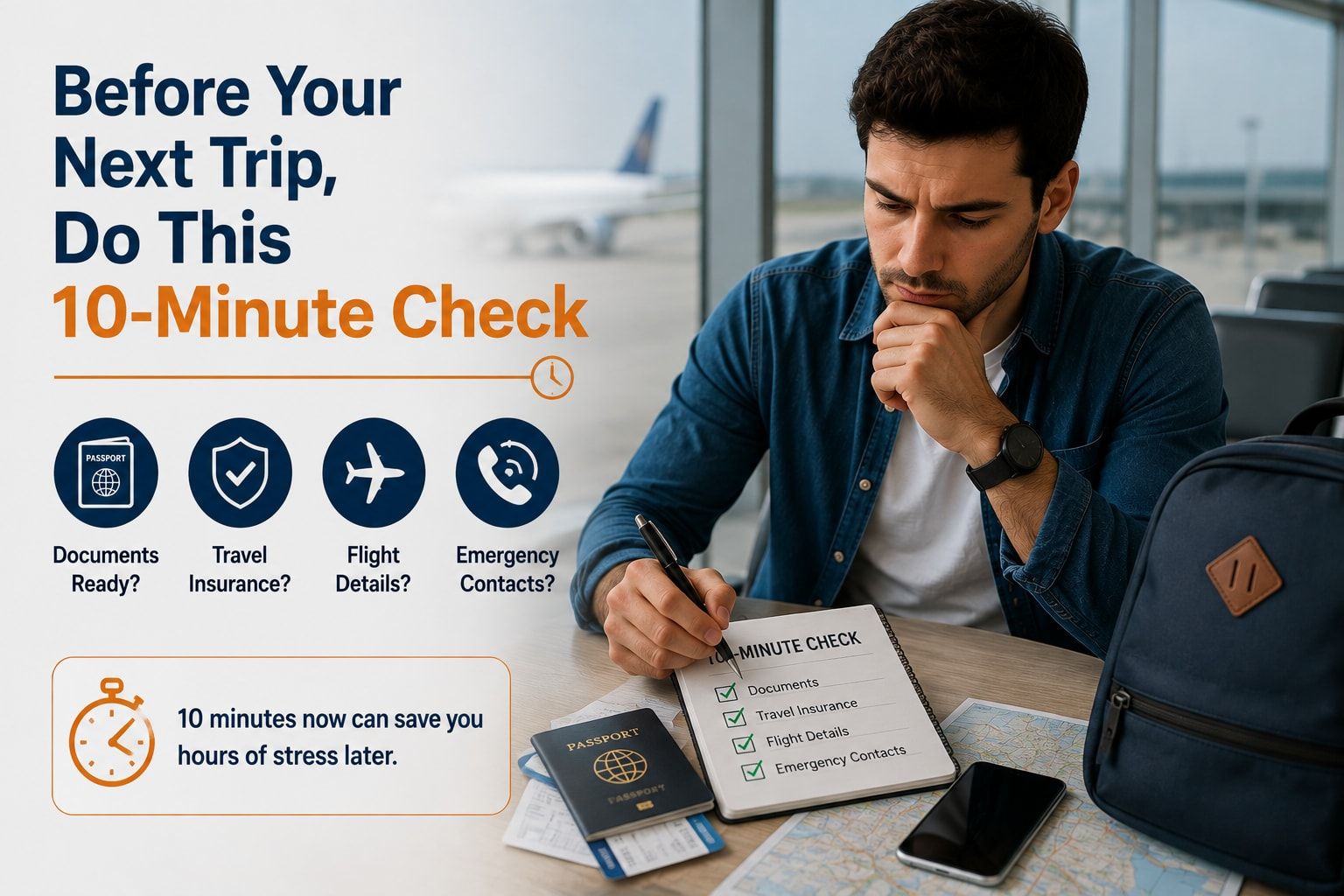
Before leaving, take ten minutes and check:
- What travel insurance do I have?
- What does it actually cover?
- What credit card did I use to pay for the trip?
- Does that card include travel protection?
- Where is the policy document?
- What is the emergency contact number?
- Are my important booking receipts saved?
- Are my flights on one booking or separate bookings?
- What are the cancellation terms for my hotel?
- What should I do first if something goes wrong?
That small preparation can make a surprisingly big difference.
Final Thought
Travel insurance isn’t a replacement for airline passenger rights.
An airline’s responsibility isn’t a replacement for travel insurance.
And a travel credit card isn’t automatically a replacement for either one.
They each exist for different situations.
The smartest approach is to understand all three before you travel and know which one to approach first when something goes wrong.
Because when you’re standing at an airport looking at a cancelled-flight notification, the last thing you want to do is start reading a 40-page policy from the beginning.
You want to know what happened, what you’re entitled to, what you’ve actually lost and who you should contact next.
FAQs
Does the airline always pay when a flight is cancelled?
No. What the airline must provide depends on the reason for the cancellation, the route, the airline’s terms and the passenger-rights rules that apply to the journey.
Should I contact the airline or travel insurance first?
For an airline cancellation or major flight disruption, it usually makes sense to start with the airline and understand your available options. Then check your travel insurance for additional covered losses.
Can I claim both airline compensation and travel insurance?
You may be able to use both where they cover different parts of the situation. However, you generally shouldn’t receive duplicate reimbursement for the same loss. Always disclose relevant refunds or compensation when making an insurance claim.
Does travel insurance cover every cancelled trip?
No. Policies normally cover specific cancellation reasons and have exclusions and conditions. A voluntary decision to cancel a trip may not be covered.
Does my credit card automatically insure my trip?
Not necessarily. Travel benefits vary between cards. Some require you to pay for the trip, or part of it, with the eligible card. Always check the benefit terms for your particular card.
What happens if my baggage is lost?
Start by reporting the missing baggage to the airline or baggage carrier and keep the report reference. You may then have options under the airline’s applicable baggage rules, travel insurance or eligible credit-card benefits.
Can travel insurance pay for a hotel after a flight cancellation?
It can in some situations if the policy covers the particular disruption and the expense meets the policy conditions. Check the policy before assuming the cost will be reimbursed.
What if I miss a connecting flight?
The answer can depend heavily on whether both flights are part of the same booking. If they are separate tickets, your options may be different. Travel insurance and certain credit cards may also provide missed-connection or delay benefits.
Is credit-card travel cover better than travel insurance?
Not necessarily. Credit-card benefits and travel insurance are designed differently. A credit card may provide useful additional protection, while a dedicated travel insurance policy can provide broader benefits such as medical cover, depending on the policy.
What documents should I keep for a travel insurance claim?
Keep booking confirmations, tickets, receipts, cancellation emails, airline communications, baggage reports and any other documents that show what happened and what you paid.
Can I claim for a hotel I didn’t use because of a flight cancellation?
Possibly. It depends on the hotel’s cancellation terms, the airline’s responsibilities and whether your travel insurance or card protection covers the resulting loss.
Plan the Trip Before You Have to Deal With the Problems
Most travellers think about insurance after booking the trip.
But planning the trip properly in the first place can also reduce unnecessary stress when plans change.
If you’re planning a trip and don’t want to spend hours moving between saved posts, destinations, bookings and daily activities, Turom can help organise the planning side with AI-powered travel planning and creator-led travel inspiration.
Instead of treating travel planning as a huge list of places to visit, Turom is designed to help turn travel ideas into a more usable itinerary and keep the plan useful while you’re actually travelling.
So before your next trip, don’t just ask where you’re going.
Think about how you’ll plan it, what could go wrong and what you’ll do if it does.
A little preparation before takeoff can save a lot of confusion later.